

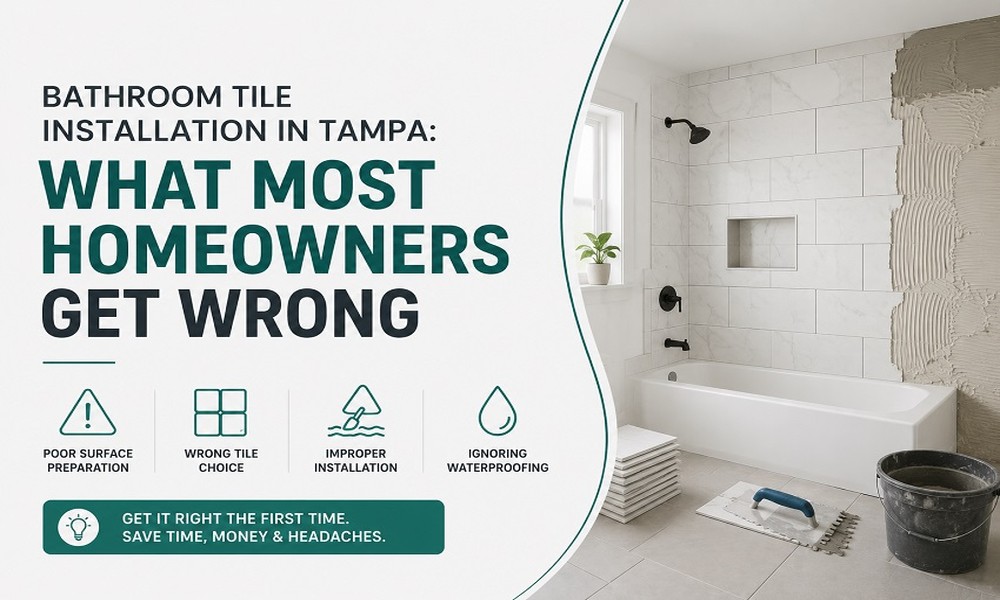
Most bathroom tile problems in Tampa homes don’t actually start with the tile.
They start underneath.
A lot of homeowners first notice things like cracked grout, loose tiles, or a strange smell in the bathroom. Some see water leaking outside the shower or soft spots in the floor.
But here’s the reality – in most cases, the issue isn’t the tile surface at all.
Quick answer:
Bathroom tile fails in Tampa homes mainly because of poor waterproofing, improper installation, and skipped surface preparation.
Why Bathroom Tile Installation in Tampa Is Different
Florida homes deal with constant humidity, moisture, and temperature changes.
That changes everything.
Bathrooms in Tampa and St. Petersburg are exposed to moisture almost every day. Steam, water, and humidity don’t just stay on the surface – they slowly work their way underneath if the system isn’t built correctly.
And this is where most problems begin.
Tile and grout are not waterproof.
They might look solid, but water can pass through over time.
That’s why professional bathroom tile installation in Tampa is not just about placing tile – it’s about building a complete system underneath that protects your home.
Common Bathroom Tile Problems Homeowners Notice
Most people don’t catch the issue early.
By the time something feels off, damage has already started behind the tile.
Typical signs include:
– grout cracking or falling out
– tiles that sound hollow or feel loose
– water escaping the shower area
– soft or weak spots underfoot
– musty or damp smell
And in most of these cases, the real problem is hidden behind the tile.
What Actually Causes Bathroom Tile to Fail
From what we see in Tampa Bay homes, failures usually come down to shortcuts during installation.
Not bad tile – bad prep.
Here are the most common mistakes:
No proper waterproofing system
Some installations rely only on tile and grout. That’s not protection.
Incorrect shower pan slope
If water doesn’t drain correctly, it sits and slowly damages everything underneath.
Missing moisture barrier
Water gets into walls and floors over time.
Poor surface preparation
Uneven or dirty surfaces lead to movement, cracks, and early failure.
Tile vs Waterproofing – What Really Protects Your Bathroom
A lot of homeowners believe tile is what keeps water out.
It’s not.
Tile is the finish – not the protection.
What actually protects your bathroom is:
– waterproof membranes
– properly built shower pan
– sealed transitions and corners
– correct slope toward the drain
If those parts are done right, your bathroom lasts.
If they’re not, even expensive tile won’t save it.
How Proper Bathroom Tile Installation Should Be Done
A solid installation always follows a process.
No shortcuts.
1. Inspect the surface and check for issues
2. Prepare and level the subfloor
3. Install a full waterproofing system
4. Plan the layout carefully
5. Install tile correctly
6. Grout and seal everything properly
Skipping even one of these steps can cause problems later.
Tampa vs St. Petersburg – Why Location Matters
Both areas experience high humidity, but coastal homes – especially those around St. Petersburg – often face even greater moisture exposure.
That’s why installations in this region need to be built for Florida conditions, not just standard methods.
The Cost of Doing It Wrong
Fixing a failed tile installation is never small.
We’re talking about:
– full shower tear-out
– water damage repairs
– mold removal
– replacing subfloor or framing
In most cases, it costs much more to fix than to do it right the first time.
When It’s Time to Replace Bathroom Tile
If you notice any of these, it’s usually not just a cosmetic issue:
– loose or shifting tiles
– cracks that keep coming back
– signs of water leakage
– mold or moisture behind walls
– failing shower pan
At that point, patching doesn’t solve the problem – the system underneath needs attention.
Best Flooring Options for Florida Bathrooms
Choosing the right tile also plays a role, especially in Florida conditions.
Some materials perform better than others in high-moisture environments like Tampa and St. Petersburg homes.
Popular options include:
– porcelain tile (low water absorption, very durable)
– ceramic tile (affordable and widely used)
– natural stone (premium look but requires sealing)
– waterproof vinyl alternatives for certain areas
In most cases, porcelain tile is preferred because it handles moisture better and lasts longer in humid environments.
But even the best material won’t perform well without proper installation and waterproofing underneath.
That’s why the system matters more than the surface.
How to Choose the Right Bathroom Tile Contractor in Tampa
Not all contractors approach tile installation the same way.
In Tampa and surrounding areas, choosing the right contractor can make the difference between a bathroom that lasts years and one that starts failing early.
Here are a few things to look for:
– experience with Florida moisture conditions
– understanding of waterproofing systems (not just tile installation)
– proper surface preparation process
– clear installation steps and timeline
– realistic pricing (very cheap work usually skips critical steps)
A reliable contractor focuses on what’s underneath the tile – not just how it looks when finished.
FAQ – Bathroom Tile Installation in Tampa
How long does bathroom tile installation last?
When installed correctly with proper waterproofing, tile can last 10-15 years or more.
Is tile waterproof?
No. Tile and grout are not waterproof. The protection comes from the system behind the tile.
Why does tile crack or come loose?
Usually because of poor surface preparation, movement in the subfloor, or moisture issues.
Do I need to replace everything if there’s a leak?
In many cases, yes – especially if the waterproofing system has failed.
Is professional installation really necessary?
In Florida conditions, proper installation is critical. Small mistakes can lead to expensive repairs later.
Bathroom tile installation is not just about appearance.
It’s about how it’s built.
In Tampa homes, where moisture is always present, the difference between a long-lasting bathroom and one that fails early comes down to preparation and proper installation.
A well-built system can last 10-15 years or more.
A rushed or poorly done job can start failing within a year.
And most of the time, you won’t see it until it’s already a bigger problem.
If the system underneath is done right, everything on top will hold.
