

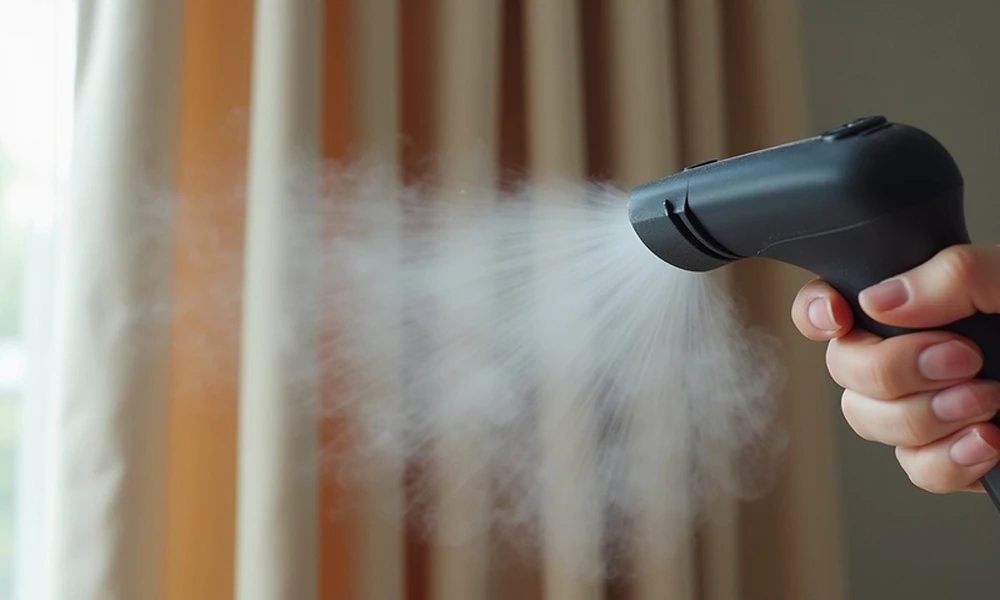
Dust mites die once their surroundings cross roughly 55 to 60 degrees Celsius, a temperature hotter than a hot bath but nowhere near boiling. A handheld steam wand can reach that easily. The catch is what happens between the nozzle and the mite. If the wand glides past too quickly, the fabric’s surface barely holds that heat long enough for it to reach anything living a few layers deeper in.
Why the Number on the Machine Matters Less Than the Speed of the Pass
Most of the marketing around steam cleaning focuses on how hot the machine gets, but heat that passes through in under a second doesn’t behave the same way as heat held in place. A proper home cleaning services in Singapore provider moves the steam head slowly and deliberately across a curtain’s surface, because that dwell time, not the headline temperature, is what actually determines whether the heat gets deep enough to matter.
What a Rushed Pass Actually Accomplishes
A fast pass still does something. It can lift loose surface dust and knock down some airborne odour, which is often enough to make a curtain look and smell freshly cleaned. What it tends to miss is anything living inside the folds, pleats, or lining, exactly the spots where mites cluster because they’re sheltered and rarely disturbed by everyday handling.
Quick Pass Versus a Properly Paced Clean
| What’s checked | Fast, single pass | Slow, deliberate pass |
| Surface dust | Mostly lifted | Mostly lifted |
| Heat reaching the fabric’s face | Brief, often insufficient | Sustained above the kill threshold |
| Mites in folds and pleats | Largely unaffected | Exposed to effective heat |
| Lined or multi-layer fabric | Heat rarely penetrates the lining | Treated layer by layer |
Why Lined and Pleated Curtains Need Even More Time
A single-layer cotton panel loses heat fast simply because there’s so little fabric between the steam and the open air behind it. A lined, interlined, or heavily pleated curtain is a different problem entirely, since each extra layer absorbs some of that heat before it reaches the next one. Thorough curtain steam cleaning on that kind of curtain means working each pleat and seam individually rather than running the wand once down the full drop and calling it done.
This is also why a curtain can come back from a rushed clean looking spotless and still trigger the same sneezing or itchy eyes a week later. The visible dirt is gone. Whatever was living in the folds that the steam never actually reached usually isn’t.
None of this is obvious just by looking at a finished curtain. A thorough clean and a rushed one can leave the fabric looking nearly identical from across the room, which is part of why the actual technique used matters more than the end-of-visit appearance.
Signs a Steam Clean Was Rushed
- The whole curtain, regardless of size, took roughly the same amount of time per panel.
- Pleats and seams weren’t opened up or treated separately from the flat sections.
- The curtain was still slightly damp to the touch within a minute or two of the wand passing, suggesting barely any dwell time at each spot.
- No attention was paid to the lining side, only the face fabric visible from the room.
None of these signs are visible from a photo or a quick glance after the fact, which is exactly why asking about the process before booking tends to matter more than asking for before-and-after pictures afterward.
A curtain that looks clean and a curtain that’s actually been treated long enough to matter aren’t always the same thing. Contact Doctor Clean to have it done properly, pleat by pleat.
