

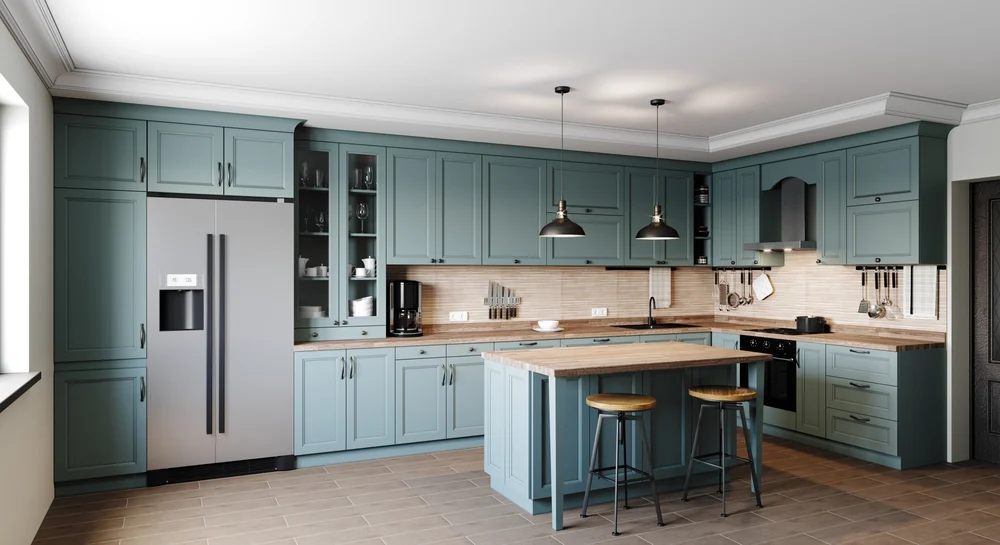
Lighting is an essential aspect of interior design that goes far beyond mere functionality. It plays a critical role in creating ambiance, enhancing aesthetics, and influencing mood and behavior. Whether natural or artificial, the right lighting can transform a space, making it more inviting, comfortable, and visually appealing. This blog explores the multifaceted importance of lighting in interior design, including advanced insights and lesser-known aspects.
1. Creating ambiance and mood
Lighting is a powerful tool for setting the mood and atmosphere of a space. Different types of lighting can evoke various emotions and feelings, from warmth and coziness to energy and excitement.
Key concepts:
Warm lighting: soft, warm lights (around 2700k to 3000k) create a cozy and intimate atmosphere, perfect for living rooms and bedrooms.
Cool lighting: bright, cool lights (above 4000k) are energizing and ideal for task-oriented spaces like kitchens and home offices.
Statistical insight: according to a study published in the journal of environmental psychology, lighting significantly affects mood and behavior, with warm lighting promoting relaxation and cool lighting enhancing concentration.
2. Enhancing aesthetics
Good lighting design highlights architectural features, enhances color schemes, and adds depth and dimension to a room. It can transform a flat, uninspired space into a dynamic and visually appealing environment.
Key techniques:
Accent lighting: use accent lights to highlight artwork, architectural details, or focal points in a room.
Layered lighting: combine ambient, task, and accent lighting to create a balanced and flexible lighting scheme.
Statistical insight: the american lighting association (ala) reports that layered lighting can improve the perceived aesthetics of a space by 20%.
3. Improving functionality
Functional lighting ensures that spaces are well-lit for their intended use, enhancing visibility and comfort for various activities.
Key types:
Task lighting: provides focused lighting for specific tasks, such as reading, cooking, or working. Examples include desk lamps, under-cabinet lights, and vanity lights.
Ambient lighting: general lighting that illuminates the entire space, usually provided by ceiling fixtures, chandeliers, or recessed lights.
Statistical insight: according to the illuminating engineering society (ies), well-designed task lighting can increase productivity by up to 15%.
4. Influencing perception of space
Lighting can dramatically alter the perception of a room’s size and shape. Proper lighting design can make small spaces feel larger and more open or create a cozy, intimate environment in a larger area.
Techniques:
Uplighting: directing light upwards can make ceilings appear higher and rooms more spacious.
Wall washing: lighting that spreads evenly across walls can make a room feel larger and more open.
Statistical insight: a study by the international association of lighting designers (iald) found that strategic lighting design can enhance the perceived size of a room by 15%.
5. Energy efficiency and sustainability
Modern lighting solutions can significantly reduce energy consumption and promote sustainability. Led lighting, in particular, is energy-efficient, long-lasting, and environmentally friendly.
Benefits of led lighting:
Energy savings: leds use up to 75% less energy than incandescent bulbs and last 25 times longer.
Environmental impact: reduced energy consumption means lower carbon emissions and a smaller ecological footprint.
Statistical insight: according to the u.S. Department of energy, widespread use of led lighting could save about 348 twh of electricity by 2027, equivalent to the annual electrical output of 44 large electric power plants.
Advanced insights into lighting design
1. Human-centric lighting
Human-centric lighting (hcl) focuses on enhancing well-being by mimicking natural light patterns. It adjusts color temperature and intensity throughout the day to align with circadian rhythms, improving sleep, mood, and overall health.
Applications:
Residential: smart lighting systems that change throughout the day to support natural sleep-wake cycles.
Workspaces: office lighting that reduces eye strain and boosts productivity by simulating natural daylight.
Statistical insight: research published in the journal “Nature” shows that hcl can improve cognitive performance and well-being by up to 20%.
2. Smart lighting technology
Smart lighting systems offer unprecedented control and customization through apps and voice commands. They provide convenience, enhance energy efficiency, and allow for personalized lighting settings.
Features:
Voice control: integration with smart home assistants like amazon alexa and google home.
Automation: automated schedules and routines that adjust lighting based on time of day, occupancy, or activities.
Statistical insight: according to statista, the global smart lighting market is expected to grow to $21.6 billion by 2024, reflecting the increasing adoption of these technologies.
3. Color rendering index (cri)
The cri measures a light source’s ability to reveal the true colors of objects compared to natural light. High cri lighting (above 90) is essential in areas where accurate color perception is critical, such as kitchens, bathrooms, and art studios.
Importance:
Enhanced visual appeal: high cri lighting makes colors appear more vibrant and true to life.
Task efficiency: accurate color rendering is crucial for tasks that require precision, such as cooking, applying makeup, or painting.
Statistical insight: the national institute of standards and technology (nist) reports that high cri lighting improves color accuracy and visual comfort by 25%.
Conclusion
Lighting is a cornerstone of effective interior design, influencing ambiance, aesthetics, functionality, and spatial perception. By understanding the different types of lighting and their impacts, homeowners and designers can create spaces that are not only beautiful but also functional and energy-efficient. Advanced insights, such as human-centric lighting and smart technology, further enhance the potential of lighting design to improve well-being and convenience. Ultimately, thoughtful lighting design transforms spaces, making them more enjoyable and livable.
