

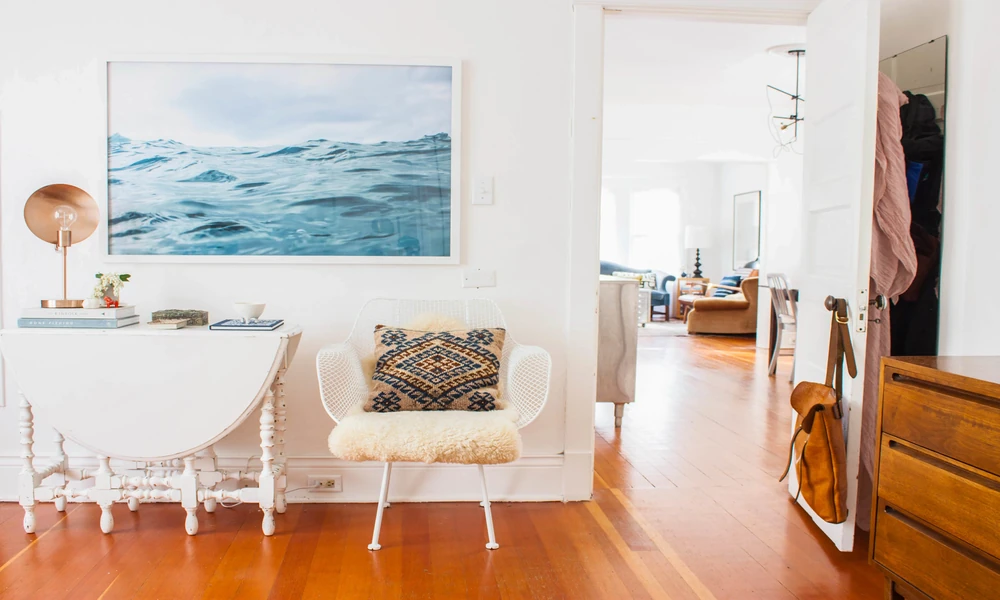
Have you ever strolled around a museum and noticed how warm it can be when looking at the artwork? That is no accident. When most museums and galleries hang art, they use something called the 57-inch rule. The concept is simple: the mid-point of the piece hangs approximately 57 inches (145cm) from the ground, which happens to be around what an average adult’s eyes’ level.
This is actually the rule that most picture hanging services follow, because it offers a balanced and natural viewing angle in settings such as home, office, and public spaces.
What is the 57-Inch Rule?
The 57″ rule is from the floor to centre of art, not top or bottom.
This method gives the space a uniform feel (ideally, if hung in sequences). It does this by placing art where it can be seen, not allowing the height of ceilings and placement of furniture to dictate where things go.
This value is not bad to start with but can be more easily adapted based on where and how the display is being used.
Why Museums Use This Method?
Very diverse kind of peoples from all over the world visits Museums, and so they have different heights and backgrounds. The practice of hanging art on eye level is better so that more people can actually see the art from either up high or down low.
The 57-inch rule also helps:
- Improve viewing comfort
- Create visual balance
- Maintain consistency between exhibits
- Highlight the artwork, not the wall
It gives exhibitions a touch of professionalism!
Does the Rule Work at Home?
This answer is true with a caveat. Things like furniture, the height of your ceiling, and how the room is laid out will all affect where it.
The reason for this is, as an example, a piece of artwork above your sofa will be hung lower than the 57-inch rule because it needs to be on a visual level with something below it. The absolute guideline works very well in hallways or open walls, though.
Experts suggesting picture framing in Melbourne always ask you to think about frame size/frame area and the wall where you are going to hang it before finalising the height.
Different Mindset for Gallery Walls
A gallery wall should be considered one large work of art rather than multiple smaller frames.
Rather than centre each frame in isolation, find the overall centre point of all of them placed together and pin that around the 57. This not only permits varying frame sizes to fit together easily, but also makes for a more balanced display.
Doing the formulation first on the floor might help you avoid drilling more holes into wall surfaces than should be required.
Professional Installation Makes a Difference
This is a common, but often unprecise and uneven measure. It may only be a few millimetres high but once you put a number of pieces alongside each other, that small difference becomes very apparent.
Professional picture-hanging services utilise precise measuring instruments and laser line levels to ensure that there is a uniform distance between the frames and they are evenly lined up. That saves time and avoids wall damage due to frequent adjustments.
Don’t Forget the Frame
The frame is part of the whole look, as much a piece of art itself. Recommended framing not only amplifies the colours but also protects artwork and completes your decor.
Professionals who do picture framing in Melbourne service can recommend the styles which are ideal for both the artwork and its location. A decent shape paired with the proper hanging height equals a professional yet permanent outcome.
Final Thoughts
The 57-inch rule has remained a favourite because it does give you an easy, if not a little simplistic, guideline on how high to hang your artwork. No matter the room, this is an excellent rule for balanced, pleasant displays. Whether it’s one single painting or an entire gallery wall, a little consideration on placement and framing will ensure your artwork pops in all the right ways.
